











Château du Coing de Saint-Fiacre
Château du Coing de Saint-Fiacre
AboutChâteau du Coing de Saint-Fiacre
At the meeting of the Sèvre and Maine rivers, Château du Coing de Saint-Fiacre appears in a written record as a wine estate in 1536. Véronique Günther-Chéreau left pharmacy to succeed her father in 1989; her daughter Aurore, a trained oenologist, joined in 2011. Together, they focus on Muscadet with the potential to age.
The south-facing slopes above the rivers lie over gneiss and are planted mainly to Melon B, with some Folle Blanche. Wine from each parcel is made separately and may rest on its lees in underground tanks for months or years, depending on the cuvée.
Château du Coing de Saint-Fiacre 2017 Monnières-Saint-Fiacre Muscadet
French White
Bright lemon, grapefruit and white flowers lead, followed by crushed rock, ripe orchard fruit and a subtle tropical note. The palate is dry and structured, with brisk acidity, fine mineral tension and gentle lees-derived breadth. Light brioche and toast emerge on the persistent finish, adding complexity without dulling its coastal freshness.
Château du Coing de Saint-Fiacre 2023 Muscadet Sèvre et Maine Sur Lie
French White
Light gold colour accompanies green apple and white peach aromas. Citrus fruit, white flowers and apricot appear on a full-bodied palate with crisp acidity and gentle minerality. Time on the lees adds textural richness. Melon de Bourgogne grows on south-facing slopes where the Sèvre and Maine rivers meet, over gneiss and schist soils. The fruit comes from fifty hectares of Guyot-trained vines.
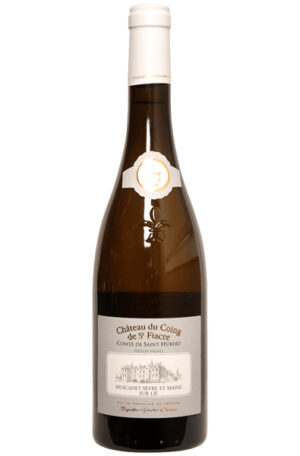
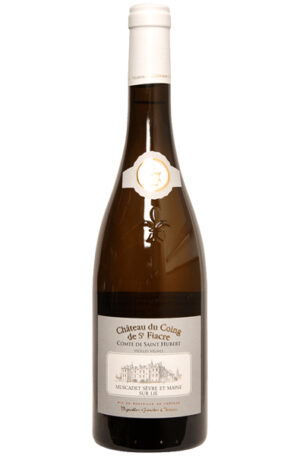
Château du Coing de Saint-Fiacre 2010 Comte de Saint-Hubert Vieilles Vignes Muscadet
French White
White fruit, green apple and ripe apricot meet lemon, honey and a distinct saline, iodine note. The palate is generous and rounded, with crisp acidity, fine lees-derived texture and a gentle natural prickle keeping the fruit lively. Flint and oyster-shell minerality carry the long, clean finish. Serve with shellfish, crab or simply prepared fish.